|
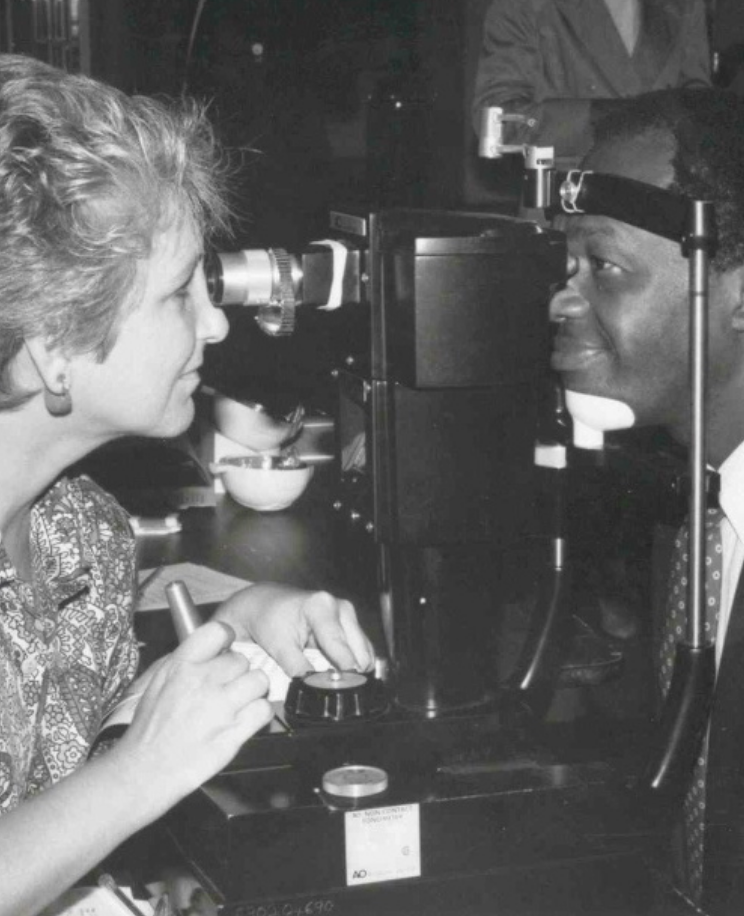
Bringing Blindness Prevention to D.C.The Prevention of Blindness Society of Metropolitan Washington (formerly D.C. Society for the Prevention of Blindness) was founded on March 10, 1936 by May B. Vories and Dr. William H. Wilmer, founder of the Wilmer Eye Institute at Johns Hopkins, as a seven-point program to bring eye health information to the Washington, D.C. community. ![]() Growing up in New Orleans, Mrs. Vories became concerned about the lack of community facilities for the blind as a teenager. As a volunteer worker, Mrs. Vories first made a survey of the adult blind in New Orleans. Armed with pertinent facts and statistics, she persuaded several civic leaders to support a program for the blind. As this movement grew, services to the blind increased, and in 1922 the Lighthouse for the Blind in New Orleans was established. Upon learning that approximately two-thirds of blindness is preventable, Mrs. Vories dedicated her life to its prevention. "I had to do this to live with myself," she said. She organized the first education class south of the Mason-Dixon Line for children who, because of poor eyesight, could not be educated in the regular grade schools. Arriving in Washington, D.C. in the early 1930s, Mrs. Vories was appalled by the number of blind persons and discovered the community had no facilities for preventing blindness. Naturally, she immediately became interested in starting a prevention program, and sought the counsel of Dr. Wilmer. Their original seven-point program consisted of 1) adequate prenatal care; 2) enactment of a bill to prevent Ophthalmia Neonatorum; 3) appointment of a school oculist; 4) preschool vision tests for children; 5) a medical social worker in the Society's eye clinic; 6) providing general information on eye health; 7) creating an industrial and sight survey. ![]() Mary Hopper Spencer became the first executive director of the D.C. Society for the Prevention of Blindness in 1936. By 1946, the Society had introduced a vision screening program for all 9,000 children in D.C. parochial schools, and had encouraged the development of a vision screening program in Prince George's County where there was almost no health program for public or parochial schools. The Society had also made one of the earliest research grants for retinopathy of prematurity (ROP) which was the cause of 50% of blindness in children. Today, blindness from ROP is less than 1%. Prevention of Blindness Society of Metropolitan Washington, 1947 and BeyondThe D.C. Society for the Prevention of Blindness started to see first-hand the changes it was making within the community. D.C. city government first recognized the month of May as "Sight-Saving Month" in 1947 after a declaration by the D.C. Society for the Prevention of Blindness. Helen Curtis Demery was appointed as the new executive director on August 18, 1947, and later changed the name of the Society to the Prevention of Blindness Society of Metropolitan Washington ®(POB). In 1954, POB began administering an annual grant from New Eyes for the Needy of New Jersey to buy new prescription eyeglasses to distribute as part of its current eyeglasses program. POB also began collecting and shipping pairs of recycled eyeglasses through New Eyes for the Needy tofund the purchase of the new eyeglasses. Today, POB continues to work with New Eyes for the Needy to distribute nearly 8,000 eyeglasses each year to homeless and low-income individuals. POB's first resale shop, the "Paris Flea Market," opened in Silver Spring, Md., in 1969 as a new business venture to provide increasing support for its sight-saving programs. Although the "Paris Flea Market" closed its doors in 2007, POB continues to operate two resale shops in Alexandria, VA and Kensington, MD.
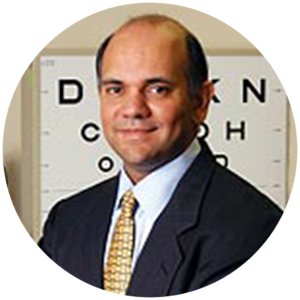
After 27 years of service, Mrs. Demery was succeeded by Dr. Arnold Simonse in 1975 as executive director. 1n 1993, the Macular Degeneration Network was established to provide monthly support groups, and was followed closely by the Stargardt's Network's first symposium in 1994. Michele Hartlove became POB's current executive director in 1999. For decades, POB has partnered with numerous organizations to expand its sight-saving programs and has worked to bring eye health information to the community. Most recently, POB began partnering with Georgetown University Hospital's KIDS Mobile Medical Clinic to bring vision screenings, eye examinations with a volunteer ophthalmologist and eyeglasses at no-cost to children without health insurance at the King Greenleaf Recreation Center in southeast D.C. In 2011, POB announced a new partnership with Washington National Eye Center to provide free eye exams to adults and follow-up care at local community centers like Bread for the City. ![]() POB opened the new Low Vision Learning Center in Alexandria, VA under the direction of Dr. Suleiman Alibhai. The Low Vision Learning Center provides low vision examinations, develops low vision rehabilitation programs and provides low vision aids. POB anticipates the opening of a new headquarters location in fall 2012 at 235 Massachusetts Avenue, NE, in the Union Station neighborhood. The 4,580-square-foot building was built in 1920 and was most recently occupied by Baurley & Associates. It was purchased by POB in fall 2009 and is currently undergoing renovations. |