

People with visual impairments, including age-related macular degeneration, diabetic retinopathy, and glaucoma, work with an optometrist specializing in low vision. Together, they create a plan to enhance their ability to live independently, safely, and comfortably.
What is vision rehabilitation, and why might I need it?
Vision rehabilitation helps determine the best tools and techniques to meet your goals. This typically involves eye exams and optical and non-optical visual aids or adaptations. It also includes education and counseling about resources such as state rehabilitation agencies, occupational therapy, support groups, etc.
Vision rehabilitation does not replace any medical management of your eye condition. Most patients who undergo vision rehabilitation typically receive medical treatments for their eye conditions whenever possible.
How is vision rehabilitation different from medical treatment?
Vision rehabilitation is not a substitute for ongoing medical treatment; it is intended to help you adapt to your individualized vision loss. It will not cure or control whatever eye condition or disease that caused your vision loss, so maintaining regular appointments with your ophthalmologist is very important. Your vision rehabilitation specialist and your medical provider will be able to work as a team to help ensure both your eye health and vision function are the best they can be.
An examination with a vision rehabilitation specialist is typically longer than an exam with your managing eye care provider. Examinations are scheduled for at least one hour, and follow-up visits may be necessary. While Medicare and most medical insurances can be billed for the examination itself, not all aspects of the examination will be covered.
Is a referral required for vision rehabilitation?
Referrals are recommended. Any healthcare provider can refer a patient for vision rehabilitation. Patients can also ask their eye care provider if a referral is appropriate. Contact us at (202) 234-1010 for more information or to schedule a vision rehabilitation appointment.
Do you accept Medicare or other medical insurance?
While Medicare and most medical insurances can be billed for the examination itself, not all aspects of the examination will be covered. Call us at (202) 234-1010 for more information.
Meet our Doctors
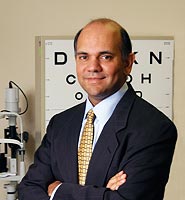 Suleiman Alibhai, O.D., F.A.A.O.
Clinical Director and Doctor of Optometry
Dr. Suleiman Alibhai completed his optometric training at the University of Houston College of Optometry in 1991, followed by a fellowship in low vision rehabilitation at the Lions Low Vision Research and Rehabilitation Center at the Johns Hopkins Wilmer Eye Institute. Dr. Alibhai has practiced vision rehabilitation in the D.C. metropolitan area since 1993. Before joining POB in 2025, he led a private practice dedicated to helping individuals with visual impairment maximize their independence and quality of life. In addition to his clinical work, he also lectures widely on vision rehabilitation to optometry societies, ophthalmology residents, and participants in POB’s Support and Resource Group Network.
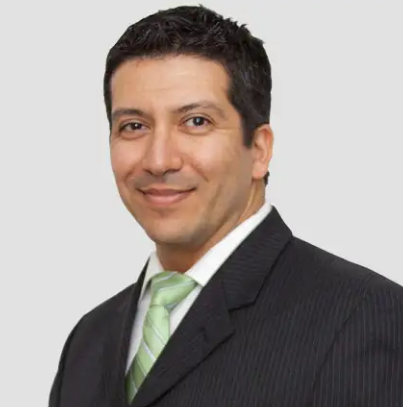 Peyam Mojallal, O.D.
Doctor of Optometry
Dr. Peyam Mojallal earned his Bachelor’s degree in Biology from Boston University. He then received his Doctorate of Optometry from the State University of New York in 1999, where he also completed an ocular disease residency. He has given several lectures, published numerous articles, and helped design and conduct experiments investigating glaucoma. Dr. Mojallal is specialized in treating patients with binocular vision problem.
Locations
- 415 2nd Street NE, Washington, DC 20002
- 4942 St. Elmo Avenue, Bethesda, MD 20814
- 105 South Alfred Street, Alexandria, VA 22314
For more information or to make an appointment, contact:
(202) 234-1010 (option 2)
Services made possible, in part, through the generosity of the Julius Fleischman Foundation, Virginia Lions Eye Institute Foundation, and District 24-A Lions Club.


